
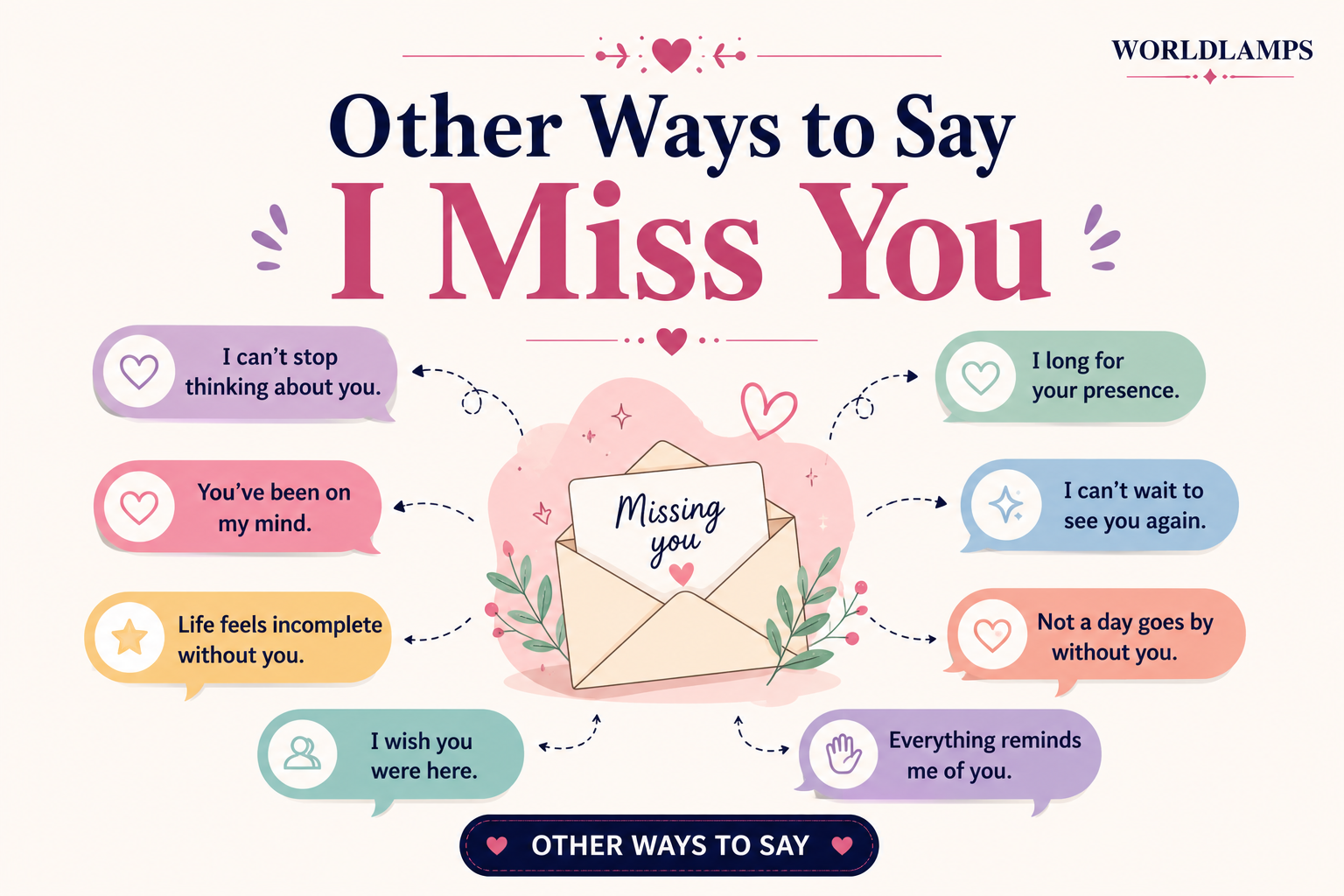
Other ways to say I miss you can help you express emotions in a more meaningful, creative, and personal way. While the phrase “I miss you” is simple and heartfelt, repeating it too often can make your messages feel predictable. Learning different ways to express missing someone helps your conversations sound more emotional, thoughtful, and natural.
People search for other ways to say I miss you for many reasons. Some want romantic expressions for partners, while others need friendly alternatives for family, coworkers, or close friends. Different situations require different tones, and choosing the right words can make your message more powerful.
For example, a romantic message may sound sweeter with phrases like “I can’t stop thinking about you,” while a casual conversation with a friend may feel more natural with “It’s been too long.” In professional situations, softer wording like “We look forward to seeing you again” may be more appropriate.
Learning other ways to say I miss you also improves emotional communication. Different expressions can show longing, affection, nostalgia, warmth, or excitement depending on the context. Instead of using the same sentence repeatedly, you can communicate emotions more clearly and creatively.
In this guide, you will discover formal, casual, professional, funny, romantic, and polite alternatives. You will also learn when to use each phrase, common mistakes to avoid, and practical tips for expressing emotions naturally.
Why You Need Alternatives
Using the same emotional phrase repeatedly can make messages feel repetitive. This is one of the biggest reasons people search for other ways to say I miss you. Alternatives help your communication feel more personal and heartfelt.
Different relationships also require different language styles. A romantic partner, close friend, family member, or coworker may all respond differently to certain phrases. Knowing multiple other ways to say I miss you helps you adapt your tone naturally.
Another important reason is emotional depth. Some expressions sound playful, while others feel deeply emotional or comforting. Choosing the right phrase helps communicate exactly how you feel.
Alternatives can also improve creativity in writing. Social media captions, text messages, love letters, and even casual conversations become more engaging when you use different expressions.
Whether you are writing to someone far away, reconnecting with a friend, or expressing affection to a partner, having multiple ways to communicate your feelings makes conversations feel more genuine.
Formal Ways
Formal alternatives are useful in respectful communication, professional situations, and polite messages.
I Look Forward to Seeing You Again
Example: I look forward to seeing you again soon.
This phrase sounds warm yet professional.
Your Presence Has Been Missed
Example: Your presence has been missed at the office.
This expression sounds respectful and thoughtful.
It Has Been a While
Example: It has been a while since we last met.
This phrase works well in formal and semi-formal situations.
We Miss Having You Here
Example: We miss having you here with the team.
This wording sounds professional yet caring.
I Have Been Thinking About You
Example: I have been thinking about you lately.
This phrase feels warm without sounding overly emotional.
Using formal other ways to say I miss you helps maintain professionalism while expressing care respectfully.
Casual Ways
Casual alternatives are perfect for texting, social media, and everyday conversations.
It’s Been Too Long
Example: It’s been too long since we hung out.
This phrase sounds friendly and natural.
I’ve Been Missing You
Example: I’ve been missing you lately.
This expression feels warm and conversational.
Wish You Were Here
Example: The trip is amazing. Wish you were here.
This phrase sounds emotional yet casual.
Things Aren’t the Same Without You
Example: Things aren’t the same without you around.
This wording feels sincere and relatable.
Can’t Wait to See You Again
Example: I can’t wait to see you again next weekend.
This phrase sounds positive and excited.
Learning casual other ways to say I miss you makes conversations feel more genuine and expressive.
Professional Ways
Professional alternatives are useful for workplace communication, colleagues, clients, and respectful interactions.
We Look Forward to Your Return
Example: We look forward to your return next month.
This phrase sounds polished and professional.
The Team Misses Your Contributions
Example: The team misses your contributions and energy.
This wording feels respectful and encouraging.
Your Absence Has Been Noticeable
Example: Your absence has been noticeable during meetings.
This phrase sounds thoughtful without being too emotional.
It Will Be Great to Have You Back
Example: It will be great to have you back in the office.
This expression sounds positive and professional.
We Hope to See You Soon
Example: We hope to see you soon at the next event.
Using professional other ways to say I miss you helps maintain respectful workplace communication.
Funny or Creative Ways
Creative alternatives add personality, humor, and charm to your messages.
My Life Is Less Fun Without You
Example: My life is less fun without you around.
This phrase sounds playful and sincere.
Even My Snacks Miss You
Example: Even my snacks miss you at movie night.
This wording adds humor and warmth.
Come Back Before I Become Dramatic
Example: Come back before I become dramatic about missing you.
This phrase sounds funny and lighthearted.
I Need My Favorite Human Back
Example: I need my favorite human back already.
This expression feels affectionate and playful.
You Left a You-Shaped Hole
Example: You left a you-shaped hole in my day.
This phrase sounds creative and emotional.
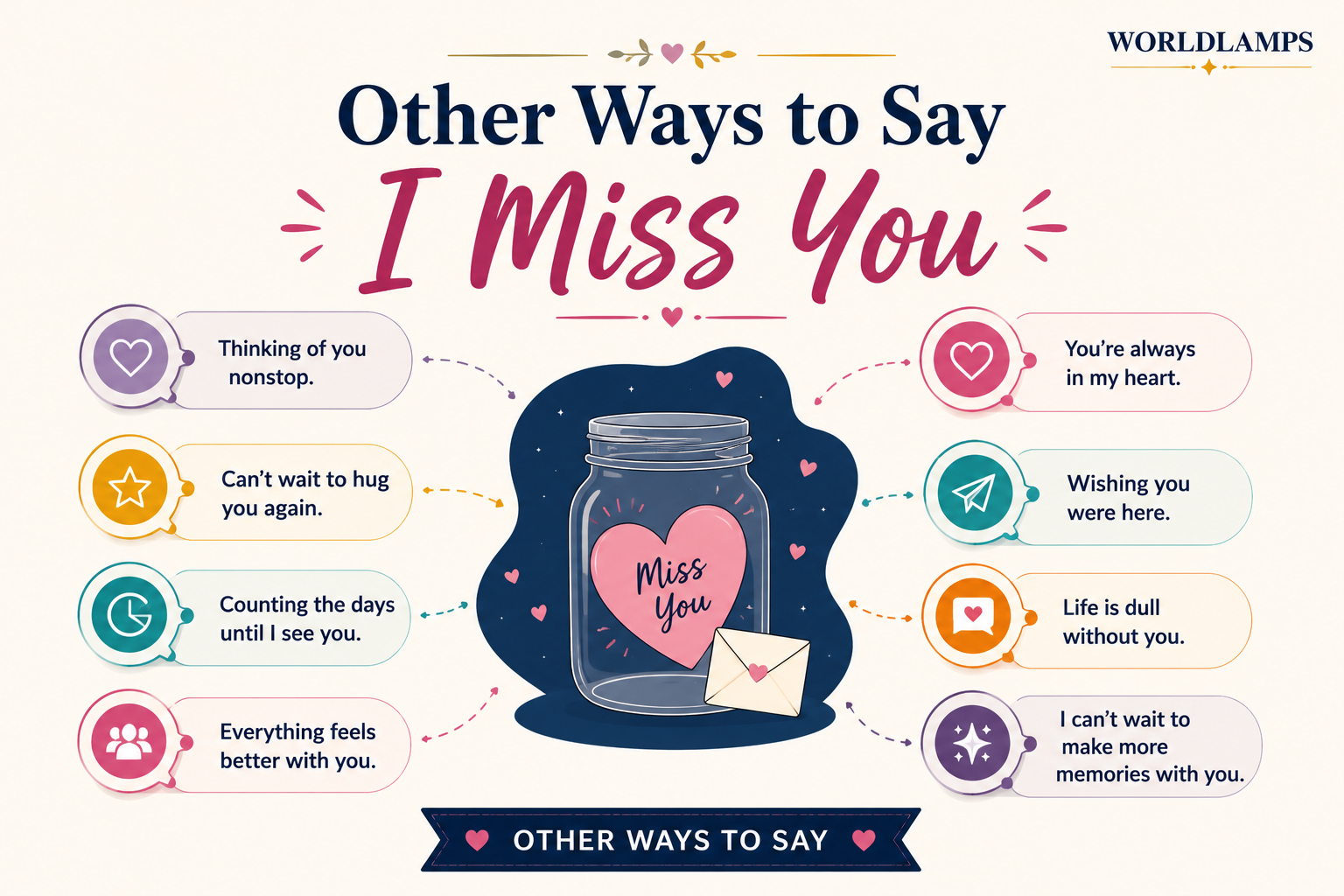
Using funny or creative other ways to say I miss you can make messages more memorable and engaging.
Polite Ways
Polite alternatives work well in respectful conversations, family communication, and gentle emotional expression.
Thinking of You
Example: Just thinking of you today.
This phrase sounds simple and caring.
Hope You’re Doing Well
Example: Hope you’re doing well. We miss you here.
This wording feels warm and respectful.
Sending Warm Thoughts
Example: Sending warm thoughts your way.
This phrase sounds kind and thoughtful.
You’ve Been on My Mind
Example: You’ve been on my mind recently.
This expression sounds caring without being overly emotional.
We Would Love to See You Again
Example: We would love to see you again soon.
Polite other ways to say I miss you help express care gently and respectfully.
When to Use Each
Understanding context is important when choosing other ways to say I miss you.
Formal alternatives work best in respectful or semi-professional communication. Casual alternatives fit friends, family, and social media conversations. Professional phrases are ideal for workplace communication and client relationships. Funny or creative alternatives are perfect for romantic partners, close friends, and playful messaging. Polite expressions work well in gentle emotional conversations and respectful interactions.
The more you understand tone and audience, the easier it becomes to choose the perfect phrase naturally.
Common Mistakes
Many people make mistakes when using other ways to say I miss you.
One common issue is choosing overly emotional phrases in professional situations. For example, dramatic romantic expressions may sound inappropriate in workplace communication.
Another mistake is overusing the same phrase repeatedly, which can make messages feel less meaningful. Some people also use playful wording in serious situations where sincerity is more important.
Grammar mistakes can also affect emotional clarity. Certain expressions sound more natural in specific sentence structures.
Ignoring tone is another common problem. Casual phrases may feel awkward in formal communication, while formal wording can sound distant in personal relationships.
Avoiding these mistakes helps your messages sound genuine and emotionally appropriate.
Tips for Choosing
Choosing the best other ways to say I miss you depends on your relationship, tone, and emotional intention.
Think carefully about the person you are speaking to. Romantic partners may appreciate emotional or playful expressions, while coworkers usually respond better to respectful wording.
Choose phrases based on emotional intensity. Some alternatives sound deeply emotional, while others feel lighthearted and casual.
Reading your message aloud can help identify awkward wording. Observing how native speakers express affection in movies, books, and social media can also improve your understanding of natural emotional communication.
Using different alternatives naturally makes your messages feel more personal and heartfelt.
How to Practice
Practice is the best way to master other ways to say I miss you.
One effective method is rewriting simple messages using different emotional expressions. Reading books, watching movies, and listening to conversations can expose you to natural ways people express affection and longing.
Speaking phrases aloud helps improve emotional fluency and confidence. Keeping a notebook of meaningful expressions can also help you remember useful alternatives.
Try using one new phrase each day in texts, conversations, or social media captions. Consistent practice makes emotional communication feel more natural and authentic.
Frequently Asked Questions
What does “I miss you” mean?
The phrase “I miss you” expresses feelings of longing, affection, or sadness because someone is absent. People often search for other ways to say I miss you to make their messages sound more emotional, creative, or personal.
What is the best romantic alternative?
One of the best romantic alternatives is “I can’t stop thinking about you” because it sounds emotional, affectionate, and sincere. Other romantic choices include “wish you were here” and “you’ve been on my mind.”
Can I use these alternatives with friends?
Yes, many of these alternatives work perfectly with friends and family. Casual phrases like “it’s been too long” or “things aren’t the same without you” sound friendly and natural in everyday conversations.
Which alternatives sound most casual?
Casual alternatives include “wish you were here,” “I’ve been missing you,” and “can’t wait to see you again.” These phrases sound conversational and relaxed.
How can I express missing someone without sounding too emotional?
Polite alternatives like “thinking of you,” “hope you’re doing well,” or “it has been a while” allow you to express care gently without sounding overly emotional.
Conclusion
Learning other ways to say I miss you can make your communication more emotional, meaningful, and memorable. Whether you need romantic expressions, casual wording for friends, professional phrases for coworkers, or creative alternatives for playful conversations, having multiple options improves emotional communication.
The more you practice these expressions, the more naturally they become part of your vocabulary. Strong emotional language helps messages feel sincere, warm, and personal while improving both writing and speaking skills.