
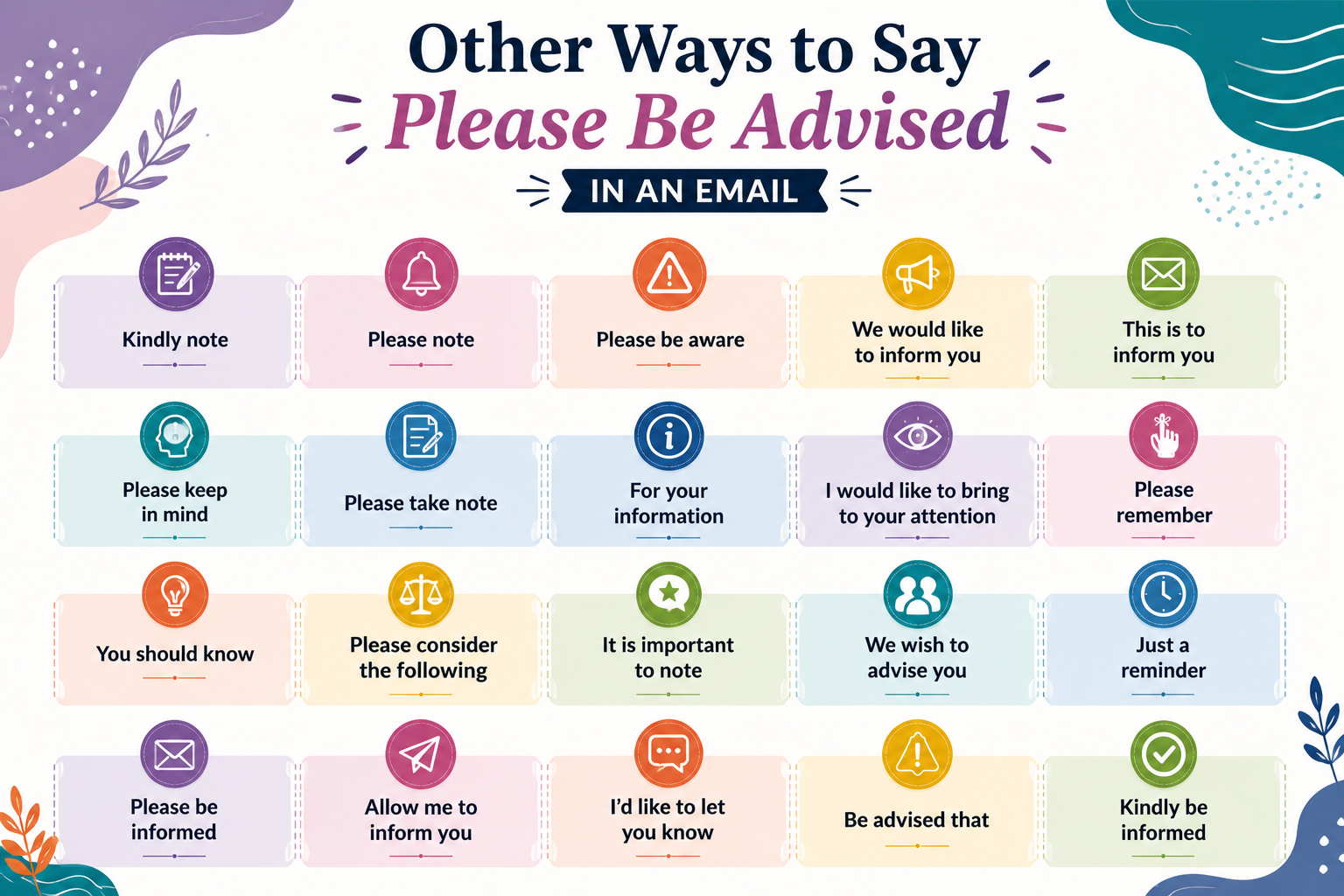
Other ways to say please be advised in an email can make your workplace communication sound more professional, modern, and reader-friendly. While the phrase “please be advised” is commonly used in business emails, it can sometimes sound overly formal, outdated, or even cold depending on the situation. That is why many professionals search for other ways to say please be advised in an email to improve tone and clarity.
Email communication plays a major role in business, customer service, corporate communication, and professional relationships. The words you choose can affect how your message is received. Using fresher and more conversational alternatives often makes emails easier to read and more engaging.
For example, instead of saying “Please be advised that the meeting has been rescheduled,” you could say “Please note that the meeting has been rescheduled” or “Kindly note the updated meeting time.” These alternatives sound smoother while still remaining professional.
Learning other ways to say please be advised in an email also helps you avoid repetitive business language. Modern workplace communication often values clarity, simplicity, and friendliness over overly formal wording.
In this guide, you will discover formal, casual, professional, polite, and creative alternatives to “please be advised.” You will also learn when to use each phrase, common mistakes to avoid, and practical tips for writing stronger professional emails.
Why You Need Alternatives
Using the same formal phrase repeatedly can make emails feel robotic and outdated. This is one of the biggest reasons people search for other ways to say please be advised in an email. Alternatives help communication feel more natural and approachable.
Another important reason is tone. Some recipients may interpret “please be advised” as stiff, overly formal, or even passive-aggressive. Softer alternatives often create a friendlier and more cooperative tone.
Modern business communication also values clarity and simplicity. Shorter and more direct wording improves readability and helps recipients understand information quickly.
Different situations also require different communication styles. Formal corporate emails may need polished wording, while internal team communication often sounds better with simpler expressions.
Whether you are sending announcements, reminders, updates, warnings, or instructions, having multiple alternatives improves email professionalism and effectiveness.
Formal Ways
Formal alternatives are ideal for official emails, corporate communication, legal notices, and business updates.
Please Note
Example: Please note that the office will remain closed on Monday.
This is one of the most professional and widely used alternatives.
Kindly Be Informed
Example: Kindly be informed that the deadline has been extended.
This phrase sounds formal and respectful.
Please Be Aware
Example: Please be aware of the updated company policies.
This wording sounds clear and professional.
Kindly Note
Example: Kindly note the revised schedule for next week.
This expression feels polished and polite.
Please Take Note
Example: Please take note of the new reporting procedures.
Using formal other ways to say please be advised in an email helps maintain professionalism while improving readability.
Casual Ways
Casual alternatives work well for internal communication, team chats, and relaxed workplace conversations.
Just a Heads-Up
Example: Just a heads-up, the meeting has moved to Friday.
This phrase sounds friendly and conversational.
Just So You Know
Example: Just so you know, the client approved the proposal.
This wording feels natural and approachable.
FYI
Example: FYI, the system update will happen tonight.
This abbreviation is common in workplace communication.
Keep in Mind
Example: Keep in mind that traffic may delay deliveries tomorrow.
This phrase sounds relaxed yet informative.
Friendly Reminder
Example: Friendly reminder that invoices are due tomorrow.
Learning casual other ways to say please be advised in an email makes workplace communication sound smoother and more modern.
Professional Ways
Professional alternatives are useful in business emails, customer communication, and management discussions.
We Would Like to Inform You
Example: We would like to inform you that your request has been approved.
This phrase sounds polished and customer-friendly.
Please Be Informed
Example: Please be informed that maintenance work will begin tonight.
This expression remains formal but more direct.
Kindly Be Aware
Example: Kindly be aware of the updated security guidelines.
This wording sounds respectful and professional.
This Is to Inform You
Example: This is to inform you that your subscription has been renewed.
This phrase works especially well in announcements.
We Wish to Notify You
Example: We wish to notify you of upcoming policy changes.
Using professional other ways to say please be advised in an email improves communication clarity and professionalism.
Funny or Creative Ways
Creative alternatives can make informal emails and team communication more engaging.
Quick Heads-Up
Example: Quick heads-up, the coffee machine is finally working again.
This phrase sounds friendly and modern.
Before You Hit Reply
Example: Before you hit reply, please check the updated attachment.
This wording feels conversational and clever.
Tiny Update
Example: Tiny update, tomorrow’s meeting starts thirty minutes earlier.
This phrase sounds casual and approachable.
In Case You Missed It
Example: In case you missed it, the office party is this Friday.
This expression works well in internal communication.
Just Keeping You in the Loop
Example: Just keeping you in the loop about the schedule changes.
Using funny or creative other ways to say please be advised in an email can make workplace communication feel more human and engaging.
Polite Ways
Polite alternatives are perfect for respectful workplace communication and customer service.
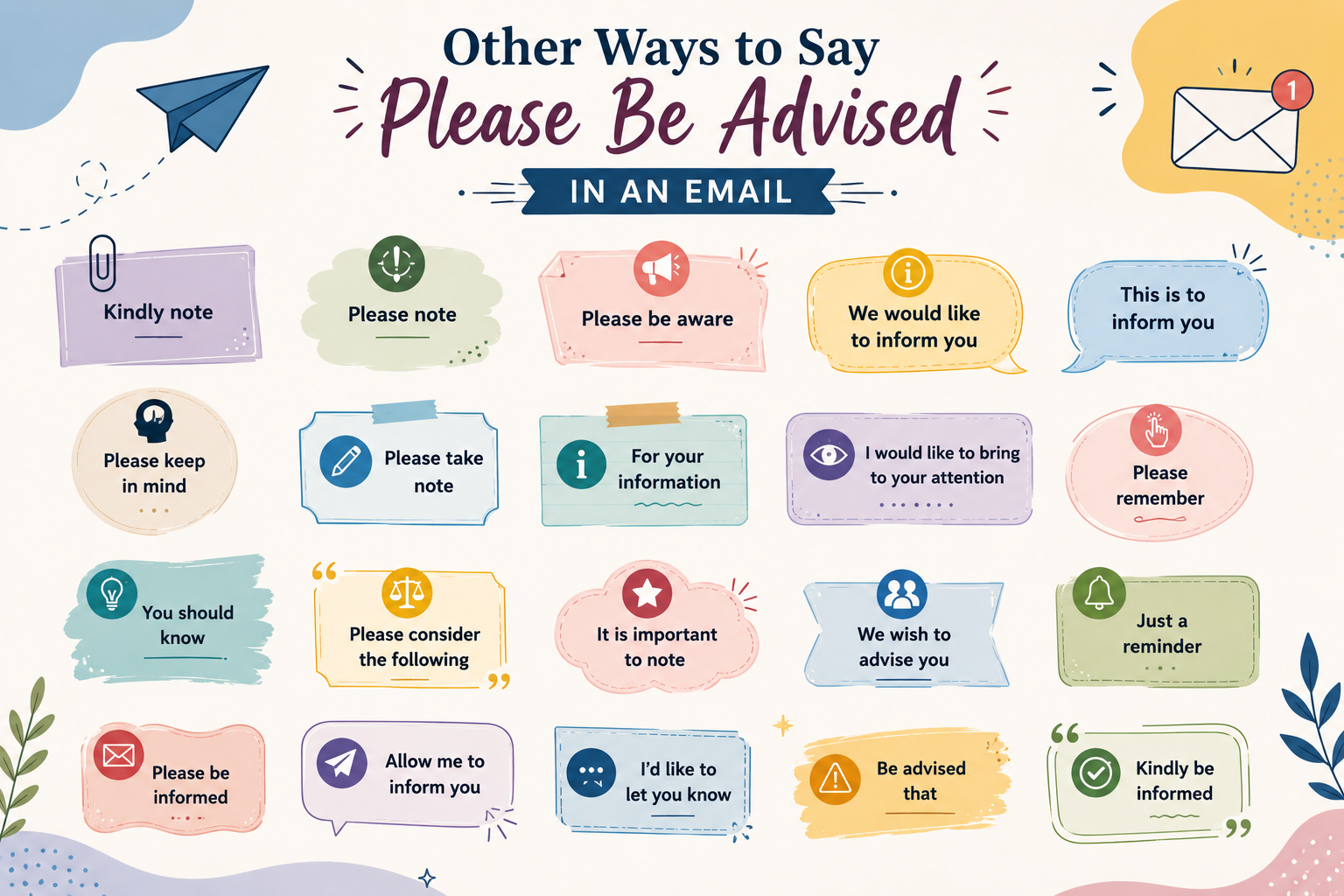
Kindly Note
Example: Kindly note the revised payment schedule.
This phrase sounds gentle and professional.
We Appreciate Your Attention To This Matter
Example: We appreciate your attention to this matter regarding the policy updates.
This wording sounds respectful and thoughtful.
Please Keep in Mind
Example: Please keep in mind that support hours have changed.
This phrase sounds softer and more conversational.
We Kindly Remind You
Example: We kindly remind you that forms are due tomorrow.
This expression feels polite and supportive.
Thank You for Your Attention
Example: Thank you for your attention to these important updates.
Polite other ways to say please be advised in an email help create respectful and positive communication.
When to Use Each
Understanding context is important when choosing other ways to say please be advised in an email.
Formal alternatives work best in official business communication, legal notices, and corporate announcements. Casual alternatives fit internal team communication and relaxed workplace conversations. Professional expressions are ideal for clients, customers, and workplace updates. Creative alternatives work best in friendly company cultures and informal emails. Polite alternatives are useful in customer support and respectful workplace interactions.
The more you understand tone and audience, the easier it becomes to choose the perfect phrase naturally.
Common Mistakes
Many people make mistakes when using other ways to say please be advised in an email.
One common issue is sounding overly formal in simple workplace conversations. Extremely stiff wording may create unnecessary distance between coworkers.
Another mistake is using casual phrases in highly professional or legal communication where formality is expected.
Some people also overuse phrases like “please note” in every email, which can make messages feel repetitive again.
Long and complicated wording is another common problem. Modern business communication usually works better when it is simple and direct.
Ignoring tone and audience can also affect how the message is received.
Avoiding these mistakes helps emails sound clearer, friendlier, and more professional.
Tips for Choosing
Choosing the best other ways to say please be advised in an email depends on audience, tone, and purpose.
Think carefully about who will read the message. Clients and executives may expect more polished language, while coworkers often prefer simpler communication.
Choose wording based on urgency and professionalism. Important announcements may require formal wording, while friendly reminders sound better with conversational language.
Keep emails concise and easy to understand. Simpler wording often improves readability and response rates.
Reading your email aloud can help identify awkward or overly formal phrasing. Observing modern workplace emails can also improve your understanding of natural professional communication.
Using different alternatives naturally helps emails sound fresher and more engaging.
How to Practice
Practice is the best way to master other ways to say please be advised in an email.
One effective method is rewriting old emails using different alternatives. Reading professional newsletters, workplace emails, and business articles can expose you to modern communication styles.
Watching workplace communication videos or business writing tutorials can also improve understanding of tone and professionalism.
Speaking phrases aloud can help improve confidence and fluency. Keeping a list of useful alternatives and examples can also strengthen memory.
Try using one new phrase each day in emails or workplace chats. Consistent practice helps these alternatives become natural parts of your communication style.
Frequently Asked Questions
What does “please be advised” mean?
The phrase “please be advised” is used in professional communication to introduce important information, updates, or instructions. Many people search for other ways to say please be advised in an email because the phrase can sound outdated or overly formal.
What is the best professional alternative?
One of the best professional alternatives is “please note” because it sounds clear, modern, and professional. Other strong choices include “please be informed” and “kindly note.”
Can I use casual alternatives at work?
Yes, casual alternatives like “just a heads-up” or “friendly reminder” work well in relaxed workplace environments and internal team communication. However, formal emails may still require more professional wording.
Which alternatives sound the most polite?
Polite alternatives include “kindly note,” “please keep in mind,” and “we appreciate your attention to this matter.” These expressions sound respectful and professional.
How can I make business emails sound more modern?
The best way to modernize business emails is by using simple, direct, and conversational language instead of overly formal phrases. Shorter sentences and reader-friendly wording often improve communication quality.
Conclusion
Learning other ways to say please be advised in an email can make your communication clearer, more professional, and more engaging. Whether you need formal wording for corporate announcements, casual phrases for team communication, polite expressions for customer service, or modern alternatives for workplace emails, having multiple options improves professional writing skills.
The more you practice these expressions, the more naturally they become part of your communication style. Strong email language improves readability, professionalism, and workplace relationships while helping messages feel modern and approachable.
Expanding your business vocabulary is one